
Massage with a clinical purpose
Massage Therapy for Pain Relief, Mobility & Better Function
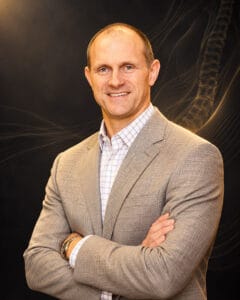
Massage is most useful when it has a reason. David Ryder uses targeted massage and orthopedic manual therapy to help active people understand stubborn problems, restore movement and get back to what matters.
Massage Is a Tool. The Goal Is What Your Body Can Do Afterward.
Massage can relax you. That is useful. It can also be used much more deliberately.
When someone comes to me because their shoulder will not move, their low back keeps flaring, their hip changes their stride, or training repeatedly irritates the same area, I am not choosing techniques because they belong to a particular massage style. I am choosing them because they may help change a specific restriction, sensitivity, movement problem, or compensation pattern.
The session is built around the problem—not around completing a routine.
What Makes This Different From a Routine Massage?
Routine massage often follows a familiar sequence. My work starts with questions:
- What movement hurts or feels restricted?
- When did it begin?
- What changes it?
- What have you already tried?
- What helped temporarily?
- What keeps bringing it back?
- What do you want to be able to do again?
Then I assess how your body is moving and responding. Treatment may include targeted massage, deeper soft-tissue work, orthopedic manual therapy, movement or mobility work, nerve-focused techniques, and spinal decompression when appropriate.
What Massage Therapy May Help With
People commonly seek therapeutic massage for pain, stiffness, restricted movement, overuse, recovery and recurring musculoskeletal problems. On this site you can explore guides for back pain, sciatica, neck pain, shoulder/arm/hand pain, hip and knee pain, and foot and heel pain.
The useful question is not whether massage is “good for” a diagnosis in the abstract. It is whether the tissues, movement, load, sensitivity, and patterns involved in your problem are appropriate for hands-on care.
Deep Tissue Does Not Mean ‘The Harder I Push, the Better It Works’
Pressure is useful when it is useful. More pressure is not automatically more therapeutic.
Sometimes a stubborn restriction benefits from deliberate deeper work. Sometimes the tissue is already irritated and the last thing it needs is a wrestling match. Good manual therapy is about judgment: enough input to create useful change without turning the session into a contest between your nervous system and my elbow.
Relief Matters. Understanding Why It Returned Matters Too.
If a massage makes you feel better for three days and then the exact problem returns under the exact same conditions, the temporary relief is still useful information. It tells us something can change.
The next question is what keeps recreating it? That may involve training load, work position, movement strategy, recovery, nerve irritation, joint restriction, sleep, or another region taking more load than it should.
Read Why Pain Keeps Coming Back for the larger framework.
When Massage Is Not the First Answer
New severe trauma, rapidly increasing weakness or numbness, loss of bowel or bladder control, unexplained fever or systemic illness, chest pain, difficulty breathing, or other urgent medical changes should be medically evaluated first.
I would rather recognize the edge of my scope than give you a beautifully executed massage for the wrong problem.
What Do You Want to Get Back To Doing?
Tell me what happened, what you have tried, what keeps returning, and what you want your body to be able to do again. If I think my approach fits, I’ll tell you what I’d suggest next. If I do not think I’m the right person, I’ll tell you that too.
Browse pain & mobility conditions • Meet David • Read client experiences