

Private Emotional Transformation Work with David Ryder
Emotional Transformation: When Your Automatic Reactions Keep Taking Over
You may know better. You may understand exactly where the reaction came from. But when the trigger appears, the old response can still take over before conscious choice catches up.
Emotional Transformation is about identifying that automatic response, interrupting the autopilot, and updating old instructions so you have more choice in how you feel, think, and respond in the present.
In-person in Albany, Oregon • Private-pay • Video sessions available nationally and internationally when appropriate
You’re Not Looking for Another Explanation. You Want Something to Change.
You may have read the books. Watched the videos. Journaled. Meditated. Talked about your childhood. Understood the pattern intellectually. Maybe some of it helped.
And yet the trigger shows up and your nervous system says, “Excellent. I remember this. I’ll take it from here.”
Insight matters. But insight is not always the same thing as a new response.
The people I work best with are not looking for someone to rescue them. They are looking for a skilled outside perspective, practical tools, and a way to work directly with patterns that have become automatic.
If you keep saying, “I know where this comes from, but I still do it,” that gap is worth investigating.
What People Usually Want Help Changing
You do not need to know the name of the technique before you ask for help. Most people search for the problem first—which makes sense. You care about getting your life back, not collecting acronyms.
Anxiety & Overthinking
When your mind keeps scanning, rehearsing, predicting, second-guessing, or trying to solve tomorrow at 2:14 a.m.
Fears, Phobias & Performance Anxiety
Flying, public speaking, competition, auditions, intimacy, failure, success—sometimes the reaction is much bigger than the present situation.
Trauma-Related Stress & Distressing Memories
Old experiences can keep shaping present reactions long after the event is over. I work carefully with the emotional patterns around those experiences and refer out when licensed trauma care is the appropriate level of support.
Low Self-Esteem, Shame & the Inner Critic
When the voice in your head would be fired immediately if it spoke to anyone else the way it speaks to you.
Relationship Patterns & Resentment
Recurring triggers, people-pleasing, jealousy, emotional distance, anger, boundaries, trust, and the same argument wearing a different hat. Anger & resentment support →
Low Mood, Feeling Depressed or Stuck
When motivation, hope, energy, or enjoyment have shrunk and you want to understand the pattern instead of simply judging yourself for having it.
Childhood or Adult Abuse Aftereffects
Including emotional, physical, or sexual abuse when old memories, shame, fear, or protective reactions are still intruding on present life. Scope and safety come first.
Limiting Beliefs & Performance Blocks
Fear of failure, perfectionism, imposter feelings, self-sabotage, confidence problems, and the strange ability to become your own most convincing obstacle.
What Keeps Getting in the Way?
Choose the pattern that sounds closest. This is not a diagnosis; it is a fast way to find the part of the Emotional Transformation library that is most likely to make sense first.
Based on what you selected
Your answer is private. This is navigation, not a diagnosis.
The Cost of Carrying It Is Usually Bigger Than the Symptom
Anxiety is not only the anxious moment. Fear is not only the thing you avoid. Shame is not only the thought you wish you didn’t have.
The real cost is what begins organizing itself around the problem:
- sleep that never quite restores you
- conversations you avoid because you already know how they will feel
- relationships shaped by guarding, resentment, people-pleasing, jealousy, or withdrawal
- opportunities you turn down because the reaction feels bigger than the reward
- intimacy that becomes complicated by old experiences or fear
- performances, auditions, competitions, presentations, or decisions hijacked by self-doubt
- mental bandwidth spent rehearsing, analyzing, defending, or trying not to feel what you are feeling
People can become extremely competent at living around a problem. That competence is impressive. It is also exhausting.
The question is not just “How do I feel better?” It is “What becomes possible if this stops running so much of my life?”
How I Work: Understand the Trigger. Change the Automatic Response. Test the New Default.
I am less interested in giving you a clever explanation than in understanding what your system is actually doing. The work is conversational, but it is also experiential.
1. Understand
What happened? What keeps happening? What do you feel, believe, avoid, expect, or automatically do?
2. Find the Default
We look for the trigger → automatic response → meaning loop—the old instructions your system tends to run before conscious choice catches up.
3. Change the Response
I may use focused tapping, attention, imagery, language, breathing, and other experiential tools to reduce intensity and create a different response.
4. Test the New Default
We revisit the trigger, future-pace real situations, and see what actually changed. “Sounds better” is not the same thing as “works better.”
Tapping is a tool, not the star of the show. People who know the terminology may call parts of this tapping therapy, EFT tapping, or emotional freedom work. I use tapping-based methods inside a broader process of listening, focused attention, emotional processing, noticing automatic responses, and practical testing.
The goal is not to make you dependent on a technique—or on me. The goal is for you to understand yourself better, have more choice when a trigger appears, and eventually need less help rather than more.
Comprehensive Initial Emotional Transformation Session: approximately 2 hours, $375. We begin with one session—no package required. If more work would be useful, follow-up options are 60 minutes for $165, 90 minutes for $250, 2 hours for $350, or 3 hours for $525. We decide what makes sense afterward based on what changed and what you want to work on next.
Want to see how I think through problems that keep repeating? Read Better Questions, Better Body Answers.
Why This May Feel Different From Talk-Only Work
Talking can be enormously useful. Being heard matters. Understanding your history matters. A good conversation can reorganize a life.
But some people reach a point where they can explain the problem beautifully and still experience the same automatic fear, shame, anger, shutdown, craving, or self-doubt when the trigger appears.
When that happens, I do not assume you need a better lecture about your childhood.
We work with the reaction while it is accessible: what you notice in your body, the images or memories that arise, the meaning you attached to an experience, the belief that gets activated, and the response your system has learned to run on autopilot.
Sometimes the next breakthrough is not more information. It is a different experience.
That is also why I pay attention to stress and recovery. A system running on high alert can have a harder time reflecting, sleeping, regulating pain and emotion, and noticing subtle internal signals. Read more about stress, recovery and the nervous system.
Who I Work Best With
I do my best work with people who are ready to participate.
- You know something needs to change, even if you do not yet know how.
- You are willing to look honestly at patterns instead of making everyone else responsible for changing first.
- You can be curious about your reactions without turning self-awareness into self-attack.
- You are willing to try something experiential rather than only discussing the problem intellectually.
- You care about what changes in real life, not just whether the session felt interesting.
- You value privacy, individual attention, and private-pay work enough to invest in it.
You do not have to arrive cheerful, fearless, perfectly self-aware, or convinced this will work. Skepticism is welcome. Passive outsourcing of responsibility is not.
I can work with doubt. I cannot do your half of the experiment.
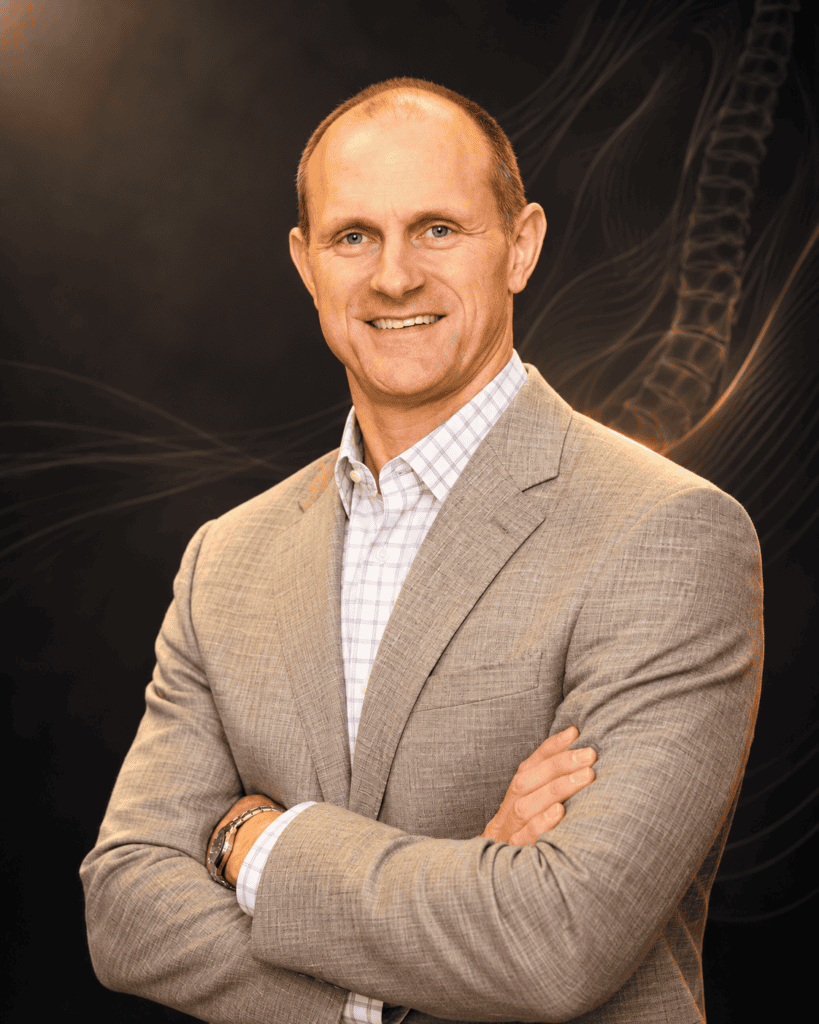
Why David Works This Way
I came to this work the same way I came to orthopedic manual therapy: by getting dissatisfied with explanations that did not produce enough useful change.
My background in systems thinking, athletics, injury and recovery, advanced education, teaching, and years of studying how people learn and change taught me to look for structure: What sets the reaction off? What meaning does the person give it? What keeps reinforcing it? What changes when we interrupt the pattern?
I have learned from many teachers and methods. I do not pretend I invented the ingredients. What matters is judgment—knowing what to use, when to use it, when to stop, and when someone needs a different kind of professional help.
Read the story behind David’s approach → • Read Emotional Transformation client experiences →
An Important Line I Won’t Blur
This service is private personal-development and stress-reduction support. I do not diagnose mental disorders, prescribe medication, or provide licensed mental-health counseling.
If what you are dealing with requires licensed clinical care, crisis support, medication management, or a trauma specialist working within a regulated mental-health scope, I will tell you rather than pretending my tool is the answer to everything.
If you are in immediate danger, at risk of harming yourself or someone else, or in an acute mental-health crisis, this is not the appropriate service. In the U.S., call or text 988 for crisis support or use emergency services when immediate safety is at risk.
Questions People Usually Ask Before They Reach Out
Do I have to believe in tapping?
No. Belief is not an entrance exam. Tapping is simply one tool I may use while we work with attention, emotion, memory, meaning, and automatic reactions.
Is this EFT tapping?
My work has roots in tapping-based methods, including ideas commonly associated with EFT and related approaches, but I do not run everyone through a memorized script. The technique serves the person—not the other way around.
Do I have to tell every detail of a painful experience?
No. We need enough information to understand what is being activated, but there is no prize for forcing disclosure. With significant trauma or abuse history, pacing and scope matter.
How many sessions will I need?
I do not sell a universal session count. A focused fear or performance block is different from a pattern built over decades. We look at what changes, what holds, and what the next useful step is.
What if I have already tried counseling, self-help, meditation, or other approaches?
That can actually be useful information. Tell me what helped, what did not, and what still happens automatically. I am not interested in proving another approach “failed.” I am interested in understanding what remains unresolved.
Are sessions private-pay? What does it cost?
Yes. This is individualized private-pay work and I do not bill insurance. The Comprehensive Initial Emotional Transformation Session is approximately 2 hours and $375. If more work is useful, follow-ups are $165 for 60 minutes, $250 for 90 minutes, $350 for 2 hours, and $525 for 3 hours. No package or minimum number of sessions is required.
Can we work online?
Yes, when the work and scope are appropriate. Private video sessions may be available across the United States and internationally. In-person sessions are available in Albany, Oregon. If you found this work while searching for EFT, Faster EFT, eutaptics, NLP or online tapping, see Tapping Therapy Online for the global-service overview.
When the Pattern Changes, What Do You Want Instead?
Emotional change can create room. The next question is what you want to do with it. Align Your Life, by Kim Ryder, is a practical book for clarifying what matters, noticing what may be getting in the way, and making more intentional choices about the life you are actually living.
By Kim Ryder · Print edition on Amazon
Tell Me What Keeps Happening
Tell me what you are experiencing, what you have already tried, what helped—even briefly—and what you want to be different in your life, relationships, or performance.
I’ll read it personally. If I think my approach fits, I’ll tell you what I would suggest next. If I think you need a different kind of help, I’ll tell you that too.
No generic protocol. No pressure to become a lifetime client. Just an honest conversation about the problem and whether I may be useful.
What Is Tapping? A Practical Introduction → • Stress, Recovery & the Nervous System →